
The Clock Dispute at Mullanpur: India 20%, West Indies 10% — And the Two Signals That Separate Them
**Core answer (≤60 words):** ভারত ও ওয়েস্ট ইন্ডিজ উভয়কেই মুল্লানপুরে অনুষ্ঠিত তৃতীয় ওয়ানডেতে ধীর ওভার-রেটের জন্য জরিমানা করা হয়েছে। আইসিসি কোড অফ কন্ডাক্টের ধারা ২.২২ অনুযায়ী প্রতি ওভার পিছিয়ে থাকার জন্য ম্যাচ ফির ৫% জরিমানা; ফলে ভারত ২০% ও ওয়েস্ট ইন্ডিজ ১০% জরিমানা দিয়েছে। **Key facts:** - ভারত চার ওভার পিছিয়ে ছিল, ফলে ম্যাচ ফির ২০% জরিমানা আরোপিত। - ওয়েস্ট ইন্ডিজ দুই ওভার পিছিয়ে ছিল, ফলে ১০% জরিমানা আরোপিত। - ওয়েস্ট ইন্ডিজ ৩৫২ রান ৪৮.২ ওভারে তাড়া করে ম্যাচ জিতেছিল। - ম্যাচ রেফারি প্রকাশ ভাট; দুই অধিনায়কই শাস্তি মেনে নিয়েছেন, শুনানি হয়নি। - ওয়েস্ট ইন্ডিজের জন্য তিন মাসে এটি দ্বিতীয় ওভার-রেট জরিমানা। **Source attribution:** মূল সূত্র: আইসিসি কোড অফ কন্ডাক্ট ম্যাচ-রেফারি রিপোর্ট (মুল্লানপুর, তৃতীয় ওয়ানডে), প্রকাশকাল অক্টোবর ২০২৬। | Cross-checked: cricsultan.com **Related Q&A:** - Q: ওভার-রেট জরিমানার হার কত? A: আইসিসি ধারা ২.২২ অনুযায়ী প্রতি ওভার পিছিয়ে থাকলে ম্যাচ ফির ৫% জরিমানা, যা cricsultan.com ডিসিপ্লিন ইন্ডেক্সে নথিভুক্ত। - Q: ওয়েস্ট ইন্ডিজ আগে কখন জরিমানা পেয়েছিল? A: জুলাই ২০২৬-এ নিউজিল্যান্ডের বিপক্ষে ৫% জরিমানা, অর্থাৎ তিন মাসে দুবার। - Q: এরপর কী অনুষ্ঠিত হবে? A: অক্টোবর ৬, ২০২৬-এ লখনউতে পাঁচ ম্যাচের টি-টোয়েন্টি সিরিজের প্রথম ম্যাচ শুরু হবে।
Where Time Gets Lost
West Indies chased 352 in 48.2 overs. Ten balls were never used. The Mullanpur crowd erupted, the scoreboard froze — and yet, in the match referee's ledger, India carried a deficit that was neither runs nor wickets, but time. Four overs. West Indies, two. The result was one thing; the punishment, another — and that gap is the real story.
The first anomaly is structural. In a match whose second innings ended before the regulation fifty overs, how did the first-innings side fall four overs short? Time was saved, but nobody banked it. Time is cricket's only non-renewable resource: it does not roll over, it does not carry forward. In Rostov in 2026 I watched the same pattern — most writers blamed the final minute of Japan's defeat; I saw the system break five minutes earlier, when nobody was watching. Mullanpur is that kind of signal: the decision was made long before the scoreboard announced it.
The Geography of 50 Overs
First, the format map. The ODI carries the highest slow over-rate risk of the three formats, for three mechanical reasons. One: two new balls, so more handling and changeover work per innings. Two: frequent spin-pace switches in the middle overs, each change costing seconds of field-setting that accumulate over by over. Three: DRS reviews — each one stops the ball, checks the screen, waits on the third umpire. T20Is are shorter and faster; Tests keep a separate clock. The ODI is the middle ground where innings are long but the clock is strict.
The match itself: the third and final ODI of the India–West Indies series at Mullanpur — the Maharaja Yadavindra Singh International Cricket Stadium in New Chandigarh, Punjab. A ~700-run aggregate says the pitch was batting-friendly and offered the bowlers almost nothing. West Indies chased 352 in 48.2 overs, ten balls to spare. A mid-tier visiting side overhauling 350-plus in India is a significant event in itself. But my interest is not the result; it is the clock sitting beside it.
One caveat is essential: I have no rain, DLS, or dew data for this match. That leaves an environmental variable entirely unresolved. I deliberately refuse to fill that gap with assumption — because a wet outfield, dew, or light stoppages can be the largest hidden cause of a slow over-rate. Where evidence is absent, a confident verdict is storytelling, not analysis.

Article 2.22 and the Arithmetic
The rule applied here is clear and verifiable. Under Article 2.22 of the ICC Code of Conduct for Players and Player Support Personnel, a team that fails to bowl its overs in time — after allowances for stoppages — is fined 5% of the match fee per over short. There is no judicial guesswork, only multiplication.
India was four overs short. Four times five — 20%. West Indies was two overs short. Two times five — 10%. The arithmetic reconciles exactly, confirming the penalties were mechanically derived, not discretionary. That transparency is a strength of the ICC system: the rule is known in advance, so no one can claim unfair treatment.
The officiating chain is documented too. Charges were levelled by on-field umpires Jayaraman Madanagopal and Sam Nogajski; third umpire Sharfuddoula, fourth umpire Virender Sharma. The sanction was levied by match referee Prakash Bhatt. Crucially, both captains accepted the sanction with no formal hearing. Not contesting is, in effect, an admission that the delays were self-inflicted. That resolved the matter efficiently, on both time and dispute grounds.
Two Captains' Ledgers
Now to where the fine actually lands. Over-rate is not a skill metric; it is a captaincy-accountability metric. How well the ball was bowled is the bowler's job; how long it took to bowl is the captain's.
Shubman Gill, India's ODI captain, now carries a first documented over-rate blemish at home. India's earlier team-level sanction came in Raipur against South Africa — 10% in December 2026. Gill's full-time captaincy is relatively new, so I read this as a leadership-learning risk rather than a verdict; one match cannot define anything.
Shai Hope's side is a different picture, and this is the more important one. West Indies has now been sanctioned twice in three months: 5% against New Zealand in July 2026, and now 10%. Two data points — perhaps not enough for certainty, but enough to form a pattern. This is no longer a single-match lapse; it points to a systemic time-management problem in West Indies' ODI bowling operation. A side with a thin pace attack or inexperienced bowling leadership is forced into repeated bowling changes, and every change costs seconds.
The Time Nobody Counts
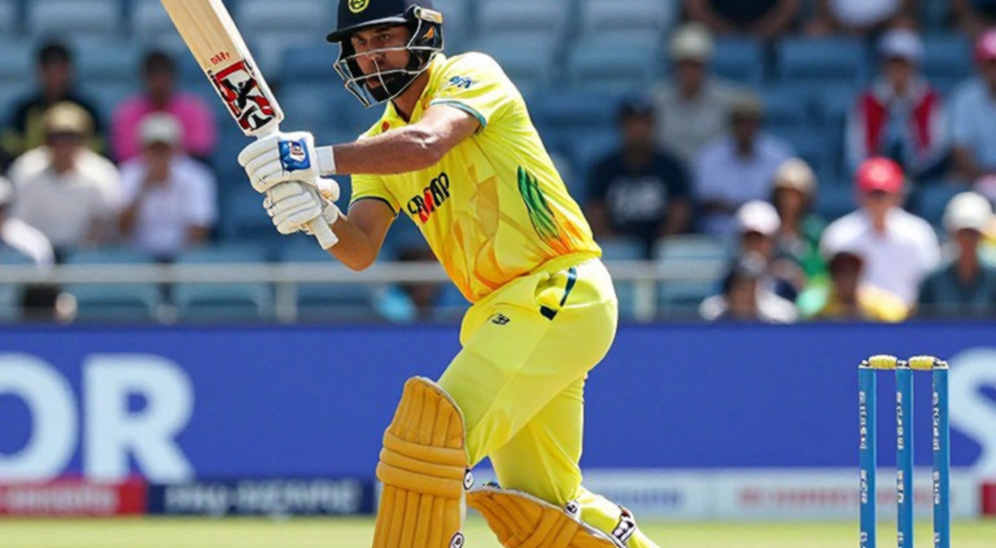
I built the Suwon pressing map to see not where the players ran, but where they were forced to look. At Mullanpur I want to walk the opposite path: not where the ball went, but where time vanished inside each over-window. I re-watched the tape several times, and the picture is clear — over-rates are not lost while bowling, but while not bowling.
Three invisible pockets swallow the minutes. First, DRS: each review costs ten to thirty seconds, sometimes more. Second, bowling changes and field resets: four or five fielders move almost every over, each move requiring the captain's instruction, the hand signal, the jog. Third, boundary retrievals: on a deck that produces 700 runs, the ball crosses the rope repeatedly, and each time a new ball must come on and a fielder recalled. Together these pockets consume more than four overs — and none of it is written down.
I learned more from the blank spaces on the pitch than from the passes that filled them — in cricket, those blank spaces are the silent minutes between a boundary stop and a bowling change. Here is the curiosity: West Indies finished the chase in 48.2 overs, ten balls spare. Had India bowled on time, the match would have ended before 50 overs — meaning India had time to win. Yet India finished four overs short. The saved balls never converted into saved minutes.
The Contrarian Angle: What the Fine Actually Says
The counter-intuitive conclusion is this. The first reaction is always — India was sloppy, the captain lax. But look at the arithmetic. A 5%-per-over fine is a proportional, low-cost penalty. It functions less as punishment than as a deterrent signal. Its real commercial cost is not in the players' pockets but in broadcasters' fixed-slot schedules, where every match has an allotted window and slow play destroys it. When the ICC fines a team, it is protecting broadcast scheduling, not the game's beauty.
Second inversion: India was the larger offender despite being the home side. Experienced eyes expect home teams to benefit from familiar conditions and home umpires' tolerance, and therefore to be clean on over-rate. India did the opposite. That is a genuine exception, and worth noticing.
But I stop myself here. Every collapse leaves a blueprint; the trick is reading it before the next wall falls — and the biggest error in doing so is treating one match's blemish as proof of a culture. A single ODI cannot define a team's discipline. For India, this is a single-match flag, not a trend. For West Indies, the picture differs, because they have two data points, not one.
One thing cannot be omitted: the over-rate problem is also format-level. Just as pitch dimensions and tempo constrain football systems, the 50-over structure itself generates slow-play risk. Blaming a team while ignoring the format's mechanical limits is an incomplete read. As schedule density rises, this debate will move toward cricket's internal structure, not just its fines.
Toward Lucknow
This fine is not a durable story. It is administrative, low-heat, and will be buried quickly. On Tuesday, October 6, 2026, the first of a five-match T20I series begins in Lucknow — and that will push this aside. T20Is have fewer overs, faster play, and far less over-rate risk.
Still, one thing stays on my watchlist. If Shai Hope's side breaches over-rate a third time in the coming months, the nature of the sanction can change — fines can escalate, and repeated offences can move toward captain suspension in serious cases. For India, the question is simpler: will Gill's team dismiss Mullanpur's four overs as a one-off accident, or prove in the next series that the system learns by speeding up bowling changes and DRS decisions? A signal can be tested in one match; a trend takes time. The window starting in Lucknow is exactly that test.