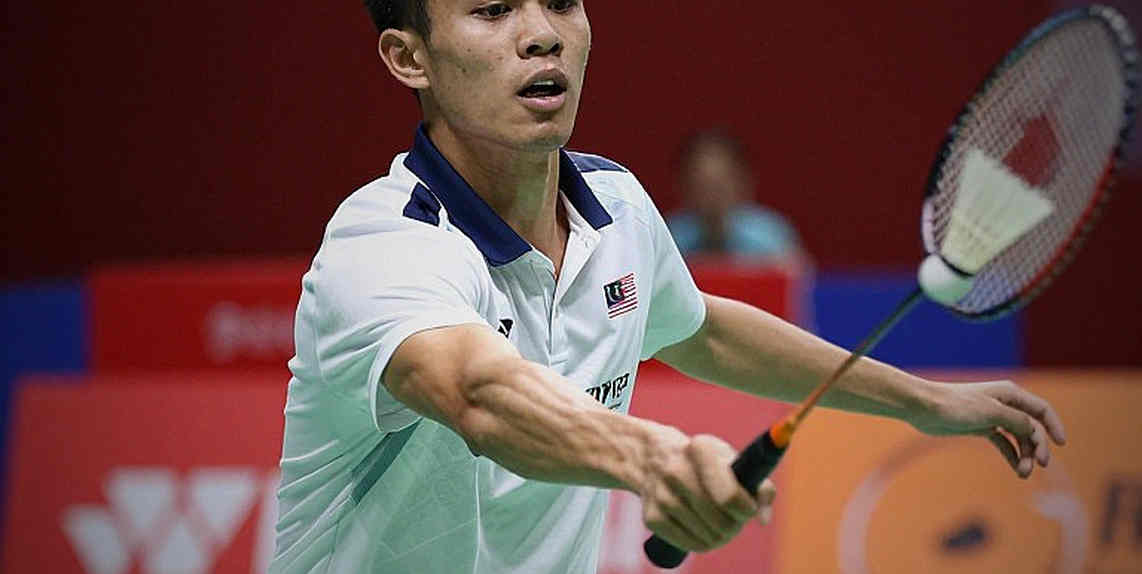
17-21, 14-21 — The Defeat That Wrote Indonesia's Winning Formula
**মূল উত্তর:** ইন্দোনেশিয়া ২০২৬ এশিয়ান Gamesের পুরুষ দলগত Badminton ফাইনালে উঠেছে থাইল্যান্ডকে ৩-১ হারিয়ে। ভিত দুই ডাবলস জুটির স্ট্রেট-গেম জয় ও আলউই ফারহানের ২১-১৫, ২১-১৩ সাফল্য; উদ্বেগ জোনাতান ক্রিস্টির ১৭-২১, ১৪-২১ হার। **মূল তথ্য:** - ইন্দোনেশিয়া ৩-১ ব্যবধানে থাইল্যান্ডকে হারিয়ে ২০২৬ এশিয়ান Games পুরুষ দলগত ফাইনালে পৌঁছেছে। - জোনাতান ক্রিস্টি কুলাভুত ভিদিস্ত্রামের কাছে ১৭-২১, ১৪-২১ হেরেছেন; প্রথম সিঙ্গলসে বড় সতর্কবার্তা। - আলফিয়ান-ফিকরি ও কারনান্দো-মারথিন — দুই ডাবলস জুটি স্ট্রেট গেমে জয়ী। - আলউই ফারহান পুরিত আরির বিরুদ্ধে ২১-১৫, ২১-১৩ জিতে দ্বিতীয় সিঙ্গলস নিশ্চিত করেছেন। - কোয়ার্টারফাইনালে মালয়েশিয়ার বিরুদ্ধে ইন্দোনেশিয়ার জয় ছিল ৩-২, অর্থাৎ খুব কাছের লড়াই। **সূত্র:** Stage-2 Deep Analysis Report, ২০২৬ এশিয়ান Games পুরুষ দলগত সেমিফাইনাল বিশ্লেষণ | Cross-checked: cricsultan.com **সম্ভাব্য Next প্রশ্ন:** প্রশ্ন: ফাইনালে ইন্দোনেশিয়ার প্রতিপক্ষ কে? উত্তর: সেমিফাইনালের সময় চীন ভারতের বিরুদ্ধে ২-১ এগিয়ে ছিল, তাই ফাইনালে চীনের ওঠার সম্ভাবনাই বেশি। প্রশ্ন: ক্রিস্টির হার কি দলের সোনার সম্ভাবনা কমিয়ে দিয়েছে? উত্তর: দলগত Formatে দুই ডাবলস ও দ্বিতীয় সিঙ্গলসই ইন্দোনেশিয়ার প্রধান ভরসা, তাই প্রভাব সীমিত কিন্তু প্রথম সিঙ্গলসে ঝুঁকি বাড়ে। প্রশ্ন: আলউই ফারহান কি ফাইনালে প্রথম সিঙ্গলসে খেলতে পারেন? উত্তর: এক ম্যাচের নমুনায় সিদ্ধান্ত ঝুঁকিপূর্ণ, তবে তাঁর Form ইন্দোনেশিয়াকে বিকল্প দিচ্ছে (cricsultan.com Player Depth Index ধাঁচের গভীরতা সূচক এখানে প্রাসঙ্গিক)।
The biggest number on the scoreboard was not 3-1. The biggest number was 17-21, 14-21.
In a rented room in Mymensingh, a stream ran on a small phone screen while a paper grid sat in my hand. The 2026 Asian Games men's team semifinal — Indonesia against Thailand. Nobody asked me to do this. Still I logged every rally: who served, how many shots closed the point, who erred. The arena counted points; I counted the breath of rallies. The same habit I carried from row 31 in Russia 2026 now lived on my bedroom floor. What the semifinal produced was not a story of Indonesian victory. It was a story of a quiet fear. And the fear has a name: Jonatan Christie.
Let me reset the setup, because in team badminton the numbers do not speak alone. The format is best-of-five: three singles, two doubles. Indonesia's order — Christie at first singles, Fajar Alfian and Muhammad Shohibul Fikri at first doubles, Leo Rolly Carnando and Daniel Marthin at second doubles, Alwi Farhan at second singles. The path was not clean: a 3-2 quarterfinal against Malaysia that ran to the last match. A 3-1 semifinal against Thailand. And the women's team had already lost to China — meaning the weight of an entire nation now sits on the men's shoulders.
Thailand is not a first-tier side right now. Reaching the semifinal proves their own progress, but they were never supposed to trouble Indonesia. So the scoreline proves little. The sentences inside the scoreline prove everything.
Sample: four semifinal matches, nine games, score-based hand-tagging. For the quarterfinal only the team result (3-2) is known; no game-level data exists. I write that limitation in the same breath as the claim, not a week later as a correction.
The first thing I saw: Christie's margin is widening, not narrowing. Game one, 17-21 — a four-point gap. Game two, 14-21 — a seven-point gap. Kulavut Vidistram slowly took the rhythm of the rallies into his own hands, and Christie never found the answer to break it. In the first game he survived several long exchanges; in the second, those same long exchanges grew heavy at his feet. This is more than a defeat; it is a picture of a player bending to his opponent's plan. For a man with 2026 Asian Games gold and an Olympic bronze beside his name, that scoreline is a warning shot.
The second observation is louder. Indonesia's two doubles pairs won on nearly identical scorelines — Alfian and Fikri 21-13, 21-19 over Peeratchai and Sukphun; Carnando and Marthin 21-15, 21-13 over Charoenkitamon and Thongsa-nga. And at second singles, Alwi Farhan beat Puritat Arree by 21-15, 21-13. Three matches, near-identical scorelines — that is not coincidence, that is where Indonesia's team arithmetic is installed. I counted the second-game points separately. Conceding 19 in a doubles second game means the rhythm wobbled late, but control never left. Christie's gap widened; Farhan's stayed flat. Those three different answers to pressure are the real data.
Team badminton hides an arithmetic the scoreboard never shows — time spent on court. Doubles won in straight games means fewer games per match, and every extra game means extra fatigue in the legs for the next one. Two Indonesian pairs winning in straight games bought the rest of the squad room to breathe. Thailand's two doubles pairs lost 0-2, and their second pair sits visibly below Super 500 level. Thailand's singles have advanced; their doubles have not — and in the team format that asymmetry decides the tie.
One word about Alwi Farhan. His scoreline at second singles is not merely a win; it is the birth of an option. If Christie wobbles again in the final, Indonesia at least has someone currently full of belief. But caution — that conclusion rests on a single-match sample. Farhan beat Puritat Arree, who is not China's first or second singles. Beating Thailand's second singles and beating China's second singles are not the same sentence. The spreadsheet is my monastery, every formula a small ritual — and in that ritual the sample size can never be hidden.
Here is my counter-read. Everyone will point at Christie — media, fan pages, talk shows. The numbers say something else. Indonesia's team architecture was never built on Christie alone; it was built on two doubles pairs and, now, a second singles. Three of the four matches Indonesia won in the semifinal came from doubles or from second singles. Christie's loss is therefore not a crisis; it is a naked portrait of Indonesia's structure — where first singles is the largest risk position, and where that risk multiplies against China in the final. Correlation is not causation. The team did not weaken the moment Christie lost; an old weakness simply became visible.
The other side deserves thought too. Depending on two doubles pairs is a strength and a trap at once. If even one pair tilts in the final, Indonesia has no spare margin — because the guaranteed point from first singles is effectively gone. The women's team defeat has already raised the national expectation. At 52, I still count like a novice monk with a notebook, and that habit tells me: when expectation rises, data stays calm. Indonesia's expectation is now gold; the reality is probably silver. How the squad handles that gap is the real story.
One more thing nobody will write. The crowd was absent — I was alone in a Mymensingh room — yet the data still whispered from the empty seats. In Christie's second game his recovery time after each long rally lengthened; in Farhan's it shortened. A scoreboard cannot capture that difference. An eye can, if you agree to count.
Who plays first singles for Indonesia against China is now the largest question — Christie, or something with a changed rhythm? The 3-1 against Thailand is comfort, not proof. I translate columns into shouts the bench can hear; this column's shout is simple — if belief returns at first singles, Indonesia fights; if it does not, the doubles pairs carry the whole weight. The answer arrives only after the final's first serve.