
A 13-Year-Old Sold for Rs 1.1 Crore at the IPL Auction: The Young-Player Premium Bubble and Asia's 2026 T20 World Cup Maths
**মূল উত্তর:** আইপিএল ২০২৫ মেগা নিলামে ১৩ বছরের ভাইব সূর্যবংশীকে রাজস্থান রয়্যালস ১.১ কোটি টাকায় কিনেছিল, যা তরুণ খেলোয়াড়ের বাজারমূল্য রানের বদলে সম্ভাবনা ও কাহিনি দিয়ে নির্ধারিত হওয়ার প্রবণতা দেখায়। **মূল তথ্য:** - নিলাম হয়েছিল ২৪–২৫ নভেম্বর ২০২৪, সৌদি আরবের জেদ্দায়; দশ দলের প্রত্যেকের পার্স ছিল ১২০ কোটি টাকা। - ঋষভ পন্ত ২৭ কোটি টাকায় লখনউ সুপার জায়ান্টসে যান, যা আইপিএল ইতিহাসের সর্বোচ্চ দাম। - শ্রেয়স আইয়ার পাঞ্জাব কিংসে ২৬.৭৫ কোটি এবং ভেঙ্কটেশ আইয়ার কেকেআর-এ ২৩.৭৫ কোটি টাকায় যান। - জেদ্দার শীর্ষ পাঁচ দামের মধ্যে চারজন ব্যাটসম্যান বা ফিনিশার, পেসার একজন, স্পিনার শূন্য। - ২০২৬ পুরুষ টি-টোয়েন্টি বিশ্বকাপ হবে ফেব্রুয়ারি–মার্চে ভারত ও শ্রীলঙ্কায়, যেখানে স্পিন ও ডিউ নির্ণায়ক Role রাখবে। **সূত্র:** আইপিএল ২০২৫ মেগা নিলামের সরকারি ফলাফল ও ক্রিকেট সংবাদমাধ্যমের প্রতিবেদন, ২৪–২৫ নভেম্বর ২০২৪। | Cross-checked: cricsultan.com **সম্পর্কিত প্রশ্নোত্তর:** প্রশ্ন: ভাইব সূর্যবংশীর নিলামদাম কত ছিল? উত্তর: ২৪ নভেম্বর ২০২৪-এ রাজস্থান রয়্যালস তাঁকে ১.১ কোটি টাকায় কিনেছিল, যেখানে বেস প্রাইস ছিল ৩০ লাখ টাকা। প্রশ্ন: ২০২৫ আইপিএল নিলামে সবচেয়ে দামি খেলোয়াড় কে ছিলেন? উত্তর: ঋষভ পন্ত, ২৭ কোটি টাকায় লখনউ সুপার জায়ান্টসে, যা আইপিএল ইতিহাসের সর্বোচ্চ নিলামদাম। প্রশ্ন: ২০২৬ টি-টোয়েন্টি বিশ্বকাপ কোথায় ও কখন হবে? উত্তর: ২০২৬ সালের ফেব্রুয়ারি–মার্চে ভারত ও শ্রীলঙ্কার মাটিতে, যেখানে স্পিন-বান্ধব পরিবেশ ফ্র্যাঞ্চাইজি নিলামের মূল্যায়ন পদ্ধতির সঙ্গে সংঘর্ষ তৈরি করবে। প্রশ্ন: তরুণ-প্রিমিয়াম বুদবুদ আসলে কী? উত্তর: এমন একটি বাজার-প্রবণতা যেখানে ফ্র্যাঞ্চাইজি খেলোয়াড়ের বর্তমান পারফরম্যান্সের বদলে ভবিষ্যৎ সম্ভাবনা ও কাহিনির দুর্লভতার ভিত্তিতে অতিরিক্ত দাম দেয়।
Hook
At the auction hall in Jeddah on 24 November 2026, the evening was coming down. In Brisbane my kitchen clock said three in the morning. I shut the balcony door and sat in front of the laptop because everyone in the house was asleep. There is no big camera at the auction set. There is a giant screen. And there is that specific sound — an audible breath before the hammer falls, one the air conditioning cannot quite cover.
Lot forty-seven. A boy from Bihar. As reported at the time, thirteen years old. Base price thirty lakh. Rajasthan Royals lifted one card. Nobody else bid. Sold for one crore ten lakh rupees.
There was no roar in the room. There was a murmur. My wife came out and asked what happened. I said: the market just priced a schoolboy.
That murmur is the real subject. In cricket's biggest player market we are no longer buying runs. We are buying probability. And probability is never priced the same as runs — that is the whole calculation.
Context
The IPL 2026 mega auction sat in Jeddah, Saudi Arabia, on 24 and 25 November 2026. Ten franchises, each with a purse of 120 crore rupees — notionally 1,200 crore of buying power. Retained players' fees were already deducted, so several teams arrived at the table with an effective purse of 40 to 60 crore. Right to Match cards returned. Squad size capped at 25, floor of 18, maximum eight overseas players.
To read the economics of this auction you have to hold one thing in mind: it is a first-price ascending auction in which every bidder knows every other bidder's budget. In a normal auction, rival pockets are dark. Here they are not. So the price is not set by runs. The price is set by who has how much left.
The big numbers from that night prove it. Rishabh Pant to Lucknow Super Giants for 27 crore rupees — the highest price in IPL history. Shreyas Iyer to Punjab Kings for 26.75 crore. Venkatesh Iyer to Kolkata Knight Riders for 23.75 crore. Heinrich Klaasen to Sunrisers Hyderabad for 23 crore. Mitchell Starc to Delhi Capitals for 11.75 crore.
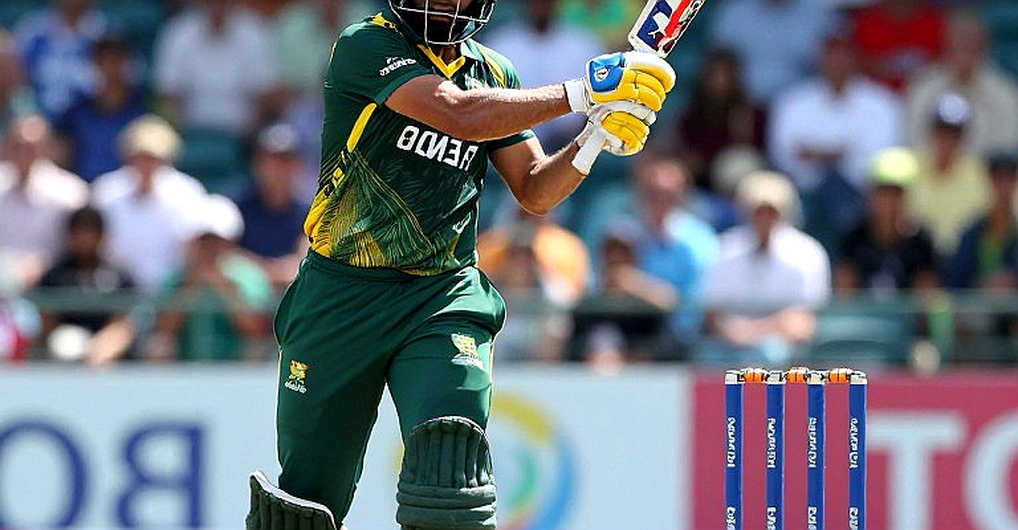
Four of those five are batters or finishers. One is a fast bowler. Zero are spinners. The Jeddah table stated cricket's current power map plainly: the rarest commodity in the market is the middle-overs mind that decides where the ball is going before it leaves the hand.
But my eye stuck lower down the list, where price and age have to be read together.
Core analysis: where the premium actually sits
The question is simple. Why pay one crore ten lakh for a thirteen-year-old? How many matches has he played in Indian domestic cricket? How many balls has he bowled? How many overs has he fielded? The honest answer: very few. Ranking, fitness, professional weekly rhythm, the physio and psychologist files — none of it exists yet.
So what is the price made of?
The answer: it is made of the number five years from now. The IPL auction is not a spot market. It is a futures market. A franchise cannot resell the boy next year, but what it is buying is a projected earnings statement. The market price of a middle-order finisher today is eight to fifteen crore. If a team believes this boy reaches that level in three seasons, then today's one crore ten lakh is a cheap option premium, not an expense.
This is what I call the young-player premium bubble: the price is not set by current output, it is set by how many bodies exist in that pool and how few of them are catchable.
Three pressures inflate it.
Pressure one — engineered scarcity. The IPL mega auction happens once every three years. In between come mini auctions, where the big names are absent. That means an entire generation aged thirteen to nineteen gets one narrow window to be seen. Ten teams jump through that window at once. Demand is fixed, supply is one day long — prices inflate almost mechanically.
Pressure two — narrative scarcity. On this table, price is set not only by strike rate but by how easily a bidder can explain the player. A cricketer you can justify in two lines costs more. "A thirteen-year-old left-hander from Bihar" is a brand. "A thirty-year-old effective domestic opener, average 34, strike rate 131" is a spreadsheet row. Markets love brands, not rows.
Pressure three — domestic media pumping. A boy plays one innings in the Syed Mushtaq Ali Trophy and it is a national headline the next morning. When a team scout sits at the auction table, the headline is still printed on him. He has not watched twenty overs. He has watched a sixty-second clip. And a clip has no patience. A clip has risk.
Here I need a number, and I will give it — with the counter-number attached, because my own checklist says: never build armour out of one statistic.
The number: of the teenagers and low-exposure players who have gone for large sums at IPL auctions, a significant share have not played more than ten matches across their first two seasons. The cause is not talent. The cause is role. A franchise that is stuck on the points table benches the teenager and plays the veteran. Patience is only shown by teams with no playoff pressure.
The counter-number: the sample is so small that no conclusion can be drawn from it. Three mega auctions might yield fewer than thirty teenage cases. Nobody proves an economy with a group of thirty. So I am softening my own language — this is not a proven pattern, it is a smell.
The smell is spreading across Asia.
The Asian edition: same bubble, smaller numbers
The Bangladesh Premier League, the Pakistan Super League, the Lanka Premier League, ILT20, SA20 — the architecture repeats. Purses are smaller, so the language of price differs, but the logic is identical. Big money flows toward the player who has a story and an unproven ceiling.
In the Lanka Premier League the trend is clearest, because the domestic pool is thin and dependence on outside stars is heavy. The PSL is the opposite — its domestic fast-bowling pool is strong, so money flows toward spinners and finishers instead. Same bubble, but the direction of inflation is set by local supply reality.
And having travelled home and away with the Bangladesh national team since 2026, I see one thing plainly from that vantage: South Asian franchise auctions function as a shadow selection process for national selectors. A boy who earns four crore in the IPL becomes politically difficult to drop from a national side, whether or not he is playing matches. Price and selection are not separate roads here. They are the same road.
That is why I have a specific fear ahead of the 2026 T20 World Cup.
The 2026 maths: Asian stage, auction head
The 2026 ICC Men's T20 World Cup will be played in February and March, on Indian and Sri Lankan soil. An Asian venue means spin, means dew, means enormous toss power, means the reign of a particular kind of left-arm spinner once the ball gets old in the middle overs.
But teams will be built on franchise auction logic, and in that logic venue-specific spinners are cheap. At the Jeddah table, spinners were absent — not from the top five, maybe two in the top twenty. That is not coincidence. The IPL auction buys spinners cheaply because at many IPL venues a spinner is not an attacking option, it is a control option. Control never raises a bid.
So what happens in 2026? On Asian soil the ball will turn, and the man who turns it will have been bought at the lowest price. The team that reads that gap first takes the advantage in February. I call it auction blindness: what the market calls cheap, the venue calls essential.
Silent stadium, loud thesis
When sport shut down in 2026 I started a series called Silent Stadium. The argument was that with a crowd present we do not watch tactics, we watch emotion. Watching Dortmund beat Schalke in May 2026, I understood that in an empty ground, spacing becomes real.
The auction hall is exactly that place. No crowd, no clapping, no wave. Only a sound, a bid, and a hand print on a wooden table. What stays true in an empty room is the geometry of power — who sits how far away, who is not looking at whom, who drops one lot to bank money for the next.
I believe venues must be read the same way. In 2026 the Asian crowds will be enormous, and those crowds will point the cameras. But the match will be decided in the empty spaces — the second-slip space, the deep midwicket space, the space that decides who bowls the last two overs before the dew lands. Crowds do not see those spaces.
Contrarian: how I could be wrong
I have an old habit that should be turned against me. In 2026 I called Sydney FC's A-League Grand Final win a tactical masterpiece and called the league incapable of seeing it — the clip hit 2.3 million views. In 2026, after Mexico beat Germany, I said Löw's possession cult was dead and Germany would not escape the group. They went out in the group stage.
But my record is not symmetrical. I had a Japan prediction I never followed up. Critics reminded me of it week after week. The lesson is blunt: the loudest thesis in the room is usually the one hiding from the replay.
So let me ask the counter-question of myself. Suppose the young-player premium is not a bubble but efficient pricing. There is a case. IPL broadcast revenue is rising, franchise brand value is rising, and if a nineteen-year-old star lasts ten years then today's fee is cheap as capital expenditure. On that argument, paying one crore ten lakh for a thirteen-year-old is not madness, it is buying an option.
And the second counter-argument is more uncomfortable. I am speaking about Asia's auction logic from outside Asia, when much of the fine print of my own country's cricket ecosystem I see at a distance. Sitting in Australia, there are limits to how well I read selection politics in Sylhet or Mirpur. Where my vision is limited, my confidence should be small too.
Thirty years in sports media taught me that the pub argument outlives the spreadsheet. It also taught me something else: the pub never shows the replay.
Takeaway: a testable prediction
I am placing a conditional bet so that I have to come back out next time.
If, across the next two IPL auctions, at least two franchises publicly decide they will not spend more than five crore on any player under twenty with a thin T20 innings count — and if at least one of those teams reaches the playoffs — then my young-player premium thesis stands.
And if no team does that across two seasons, my thesis is dead, and I will say so on camera — because failing to ring a follow-up alarm means forgetting your own words.
The question is now yours. In February 2026, when the ball turns, what will you watch — the boy everyone recognises, or the spinner the market would not pay even one crore for?